


-
pink & fushia Gadwal Paithani Meena Turning Self Butta Pure Silk Handloom Saree
Regular price ₹ 23,499Regular priceUnit price per₹ 32,499Sale price ₹ 23,499 (28% off)Sale -
Purple Gadwal Paithani Meena Turning Self Butta Pure Silk Handloom Saree
Regular price ₹ 23,499Regular priceUnit price per₹ 32,499Sale price ₹ 23,499 (28% off)Sale -
Lime green Gadwal Paithani Meena Turning Self Butta Pure Silk Handloom Saree
Regular price ₹ 23,499Regular priceUnit price per₹ 32,499Sale price ₹ 23,499 (28% off)Sale -
Emerald green Gadwal Paithani Meena Turning Self Butta Pure Silk Handloom Saree
Regular price ₹ 23,499Regular priceUnit price per₹ 32,499Sale price ₹ 23,499 (28% off)Sale -
Orange Gadwal Paithani Meena Turning Self Butta Pure Silk Handloom Saree
Regular price ₹ 23,499Regular priceUnit price per₹ 32,499Sale price ₹ 23,499 (28% off)Sale -
*Kalanjali pure silk paithani* 100% pure silk Handloom saree Allover butties Contrast blouse *Price : 23500/- + shipping*
Regular price ₹ 23,500Regular priceUnit price per₹ 25,500Sale price ₹ 23,500 (8% off)Sale -
Handloom Paithani sarees
Regular price ₹ 35,000Regular priceUnit price per₹ 38,000Sale price ₹ 35,000 (8% off)Sale -


Handloom paithani
Regular price ₹ 15,000Regular priceUnit price per₹ 16,000Sale price ₹ 15,000 (7% off)Sold out -
Deep Green & Red Woven Paithani Banarasi Silk Sarees
Regular price ₹ 3,644Regular priceUnit price per₹ 5,996Sale price ₹ 3,644 (40% off)Sale


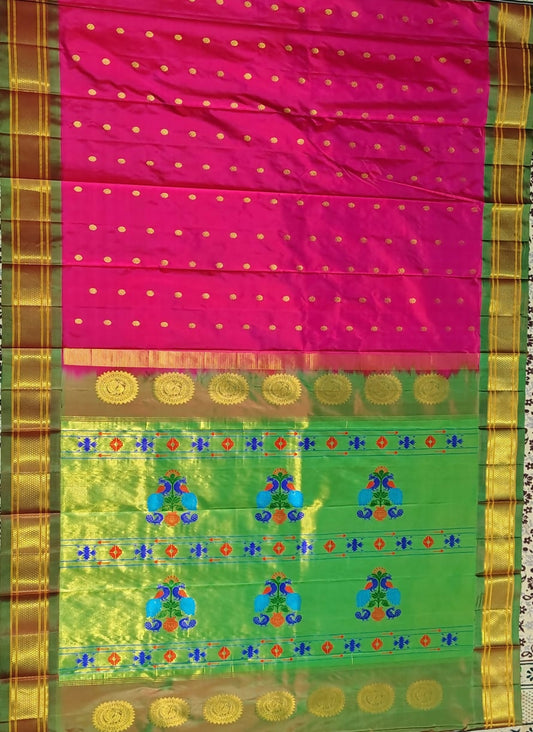

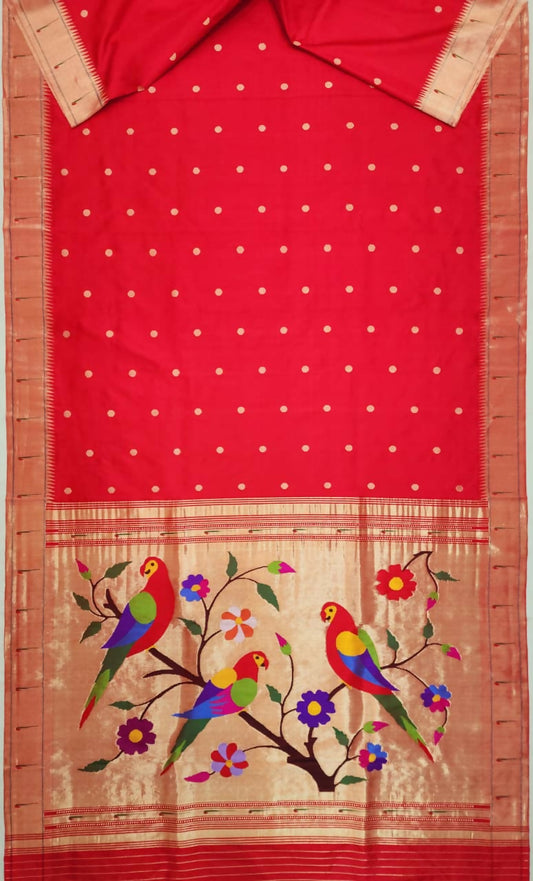


The history of Paithani saris can be traced back to 2nd century BC in Satvahana Dynasty, at that time the Paithani was made with pure gold wire with cotton and silk. The
The history of Paithani saris can be traced back to 2nd century BC in Satvahana Dynasty, at that time the Paithani was made with pure gold wire with cotton and silk. The Greco-Romans were very fond of this Paithani sari 2000 years ago. Among India’s finest handloom traditions, the Paithani saree holds a revered position. Historically worn by queens and noblewomen, Paithani sarees were symbols of prosperity, status, and artistic excellence. Even today, owning a Paithani saree is considered a matter of pride, especially in Maharashtrian households. Woven using pure silk threads and real zari, Paithani sarees are admired for their lustrous texture, vibrant colors, and signature pallu designs. Each saree is a masterpiece that reflects patience, skill, and centuries-old weaving techniques. The Paithani saree is deeply embedded in Maharashtrian culture and rituals. Traditionally, it is worn during: Weddings and bridal ceremonies Gudi Padwa and Diwali celebrations Religious rituals and family pujas Important life milestones and cultural events In many families, Paithani sarees are passed down as heirlooms, symbolizing continuity, blessings, and prosperity. The saree represents femininity, tradition, and timeless grace.Cultural Relevance of the Paithani Saree
- Choosing a selection results in a full page refresh.
- Opens in a new window.